
Can You Sue ECM Warranty Over a Warranty Claim in Florida? | Louis Law Group
ECM Warranty warranty claim denied in Florida? Know your rights under Florida law and how a dispute attorney can help. See if you qualify — free, no obligation.

7/27/2026 | 1 min read
Warranty Claim Denied? See If You Qualify
Take our 2-minute qualifier and find out if your denied warranty or service-contract claim qualifies for representation — at no cost.
See If You Qualify — Free Eligibility Check →No fees unless we win · Takes under 2 minutes · No obligation
Yes, in most cases a Florida consumer can sue ECM Warranty in a Florida court after a denied or underpaid service contract claim. The Florida approved version of the contract contains no mandatory arbitration clause, so your right to file a breach of contract lawsuit stays intact. Contract terms and filing deadlines still control what you can pursue.
Most homeowners who buy an extended warranty or home service contract never plan on litigation. They plan on a working air conditioner. But when a compressor fails, the claim gets denied for "pre-existing condition" or "lack of maintenance," and the appeal goes nowhere, the question stops being about repair scheduling and starts being about legal rights. This article walks through when suing a warranty company makes sense in Florida, why arbitration may not block you, what a breach of contract case involves, and what a court may award.
When does it make sense to sue ECM Warranty instead of keeping the appeal going?
Suing generally makes sense when the internal appeal process has stalled, the denial reason does not match what the contract actually says, and the repair or replacement cost is large enough to justify a lawsuit. Litigation is a tool for contract disputes, not a substitute for a claim file that was simply incomplete.
Before you consider a lawsuit, it is worth honestly sorting your situation into one of two buckets. Some denials are administrative. A missing invoice, a service visit performed by a shop the administrator did not authorize, or a diagnostic report that never got uploaded can all be fixed by supplying the paperwork. Those claims often get paid without anyone filing anything.
Other denials are substantive, and those are the ones that end up in court. Common patterns Florida consumers describe include:
- A denial that cites an exclusion the contract does not clearly contain, or that stretches a narrow exclusion to swallow the entire coverage grant.
- A "pre-existing condition" finding issued without an inspection, or based only on the age of the equipment.
- A "lack of maintenance" denial where you have service records, or where the contract never defined the maintenance standard being applied.
- A severe underpayment, where coverage is admitted but the offer covers a fraction of the actual repair invoice, leaving you to pay the rest.
- Silence. The claim is neither approved nor denied, and weeks turn into months while the system stays down.
- A refund or cancellation dispute, where the prorated refund you were promised on cancellation never arrives.
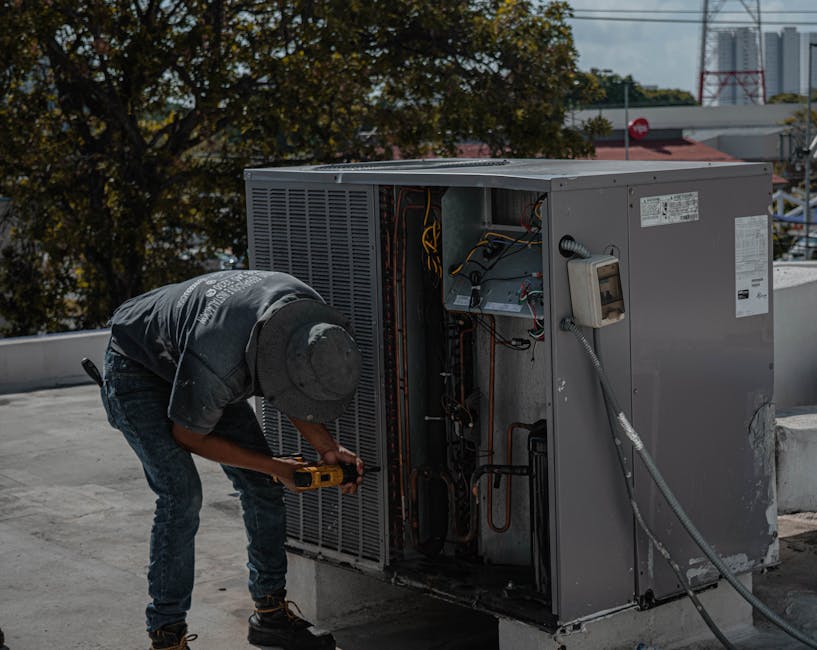
The other practical factor is amount. A full HVAC system replacement in South Florida can run into five figures, which changes the math considerably compared to a small appliance repair. If the disputed amount is modest, Florida small claims court may be the more proportionate route. If the disputed amount is substantial, or the same denial reasoning appears to be applied broadly, a full civil action may be the better fit.
If you are unsure which bucket your denial falls into, a review of the denial letter against the contract language is the fastest way to find out. See If You Qualify →
Can ECM Warranty force my claim into arbitration, or do I keep my right to court in Florida?
The Florida approved version of the ECM Warranty contract contains no mandatory arbitration clause. That means a Florida policyholder keeps the right to bring a denied or underpaid claim in a Florida court rather than being channeled into a private arbitration forum.
This matters more than most consumers realize. In a large share of consumer warranty and service contract disputes nationally, the first thing that happens after a demand letter is a motion to compel arbitration. Arbitration clauses commonly limit discovery, restrict class treatment, place the case in front of a private arbitrator instead of a judge, and can shift some costs onto the consumer. When a contract contains one, the consumer's leverage changes before the merits are ever discussed.
The absence of that clause in the Florida approved form flips the starting position. Your dispute over a denied compressor, a rejected water heater, or an underpaid repair invoice can go where consumer contract disputes traditionally go, which is a Florida civil court with normal discovery rules and a judge applying Florida contract law.
Two practical cautions apply. First, verify your own document. Contracts are revised over time and are sold in multiple states, so the version you signed is the version that governs you, not a summary from a website. Second, the absence of arbitration does not eliminate other procedural terms. Your contract may still contain a venue provision, a notice requirement, a duty to obtain authorization before repairs, or a limitations period that shortens how long you have to sue. Read the whole document, not just the coverage page.
What does a breach of contract claim against a warranty company look like?
A breach of contract claim against a service contract company follows a straightforward structure under Florida law. You show that a valid contract existed, that you performed your obligations under it, that the company failed to perform its obligation to repair, replace, or pay, and that the failure caused you a financial loss.
In warranty disputes, each element usually maps to specific documents:
| Element | What typically proves it |
|---|---|
| A valid contract existed | The signed service contract or policy, the payment record, and the declarations or coverage page identifying the covered equipment. |
| You performed your side | Premium or payment history, maintenance and service records, proof you used an authorized repair facility, and proof you reported the failure within the required window. |
| The company did not perform | The written denial letter, the underpayment offer, the claim number and adjuster notes, and the correspondence log showing what was requested and when. |
| You suffered a loss | The repair or replacement invoice, competing estimates, and receipts for related out of pocket costs. |
The heart of most of these cases is interpretation. The company reads an exclusion broadly. You read the coverage grant as written. Under Florida contract law, courts construe the agreement as a whole and give effect to its plain language, and ambiguity in a contract drafted by one party is generally not resolved in that party's favor. That is why the exact wording of the denial letter matters so much: a denial that recites a reason not grounded in the contract text is a weaker denial than one that quotes the operative exclusion.
What Florida and federal laws apply to an extended warranty dispute?
Three bodies of law commonly come into play: Florida contract law, the Florida Service Warranty Association Act at Fla. Stat. ch. 634, Part III, and Fla. Stat. § 501.204, the Florida Deceptive and Unfair Trade Practices Act. For written warranties, the federal Magnuson-Moss Warranty Act, 15 U.S.C. 2301, may also apply.
Chapter 634, Part III is the Florida statutory framework that regulates service warranty associations doing business in this state, including licensing and the terms under which these contracts are sold and administered. It is the reason a "Florida approved" version of a contract exists at all.
FDUTPA, at § 501.204, prohibits unfair or deceptive acts in trade or commerce. Where a denial pattern reflects something beyond a good faith disagreement about contract language, for example marketing coverage that the administrator systematically refuses to honor, a FDUTPA theory may be available in addition to the contract claim. FDUTPA also provides for attorney's fees to a prevailing party in appropriate cases, which can change the economics of a smaller dispute.
The Magnuson-Moss Warranty Act governs written warranties on consumer products and can supply an additional federal claim in some fact patterns. Whether it fits depends on the product, the document, and how the coverage was sold, which is a case specific analysis rather than an automatic add-on.
What damages might I recover if I sue ECM Warranty?
The core recovery in a breach of contract case is the benefit of the bargain, meaning the amount the company should have paid under the contract. Depending on the facts and the legal theories pleaded, additional categories may be available.
- The unpaid or underpaid claim amount. The repair or replacement cost the contract covered, less any deductible or service fee you owed.
- Consequential damages. Foreseeable losses flowing from the failure to perform, such as costs incurred because a covered system stayed down. Availability depends on the facts and on any limitation of liability language in the contract.
- Refund of amounts paid. In cancellation and rescission scenarios, the prorated premium or contract price at issue.
- Prejudgment interest on the sums wrongfully withheld, under Florida law.
- Attorney's fees and costs, where a statute such as FDUTPA, the Magnuson-Moss Warranty Act, or a fee provision in the contract itself supplies a basis for them.
What a court awards depends on the contract, the evidence, and the claims actually pleaded. No two denials are identical, and no outcome can be predicted from the denial letter alone. The realistic first step is understanding what your specific contract obligated the company to do and where the denial departs from it.
If you have a denial letter, an underpayment offer, or a claim that has been sitting unanswered, a review of the paperwork against your contract will tell you whether you have options. See If You Qualify →
Frequently asked questions
Do I have to arbitrate my ECM Warranty dispute?
Not under the Florida approved version of the contract, which contains no mandatory arbitration clause. A Florida policyholder generally keeps the right to file suit in a Florida court over a denied or underpaid claim. Because contract forms vary by state and by version, check the specific document you signed to confirm no arbitration provision applies to you.
How long do I have to sue a warranty company in Florida?
Florida sets statutory deadlines for filing breach of contract actions, and written and unwritten contracts are treated differently. Some service contracts also contain their own shorter limitations period. Because the applicable deadline depends on your contract type and its specific language, identify the controlling period early rather than after months of appeals.
Can I sue if the company paid something but not the full repair cost?
Underpayment is a recognized basis for a breach of contract claim. If the contract obligated the company to cover a repair and the payment made falls materially short of the covered cost, the shortfall is the disputed amount. Keep the repair invoice, the payment remittance, and any correspondence explaining how the figure was calculated.
What documents should I gather before talking to an attorney?
Gather the full service contract including all pages and endorsements, proof of purchase and payment, the claim number, the written denial or underpayment letter, all emails and messages with the administrator, the diagnostic report from the servicing technician, maintenance records for the equipment, and the repair or replacement invoice or estimates.
Is small claims court an option for a smaller warranty denial?
Florida small claims court handles lower value disputes with simplified procedures and lower filing costs, which can make it proportionate for a modest denial. Larger disputes, denials involving significant replacement costs, or matters where statutory claims and attorney's fees are in play are typically better suited to a standard civil action.
Getting your denial reviewed
The most useful thing a Florida consumer can do after a warranty denial is stop arguing over the phone and start comparing documents. Put the denial letter next to the contract and ask a narrow question: does the reason given actually appear in this agreement, and does it apply to what failed? That single comparison separates the claims worth escalating from the ones that need better paperwork.
Louis Law Group reviews Florida extended warranty and service contract denials, including the contract language, the denial rationale, and the claim correspondence, to help consumers understand what options may be available. There is no way to know what a claim is worth without reading the file, and no honest assessment can be made from the denial letter alone.
This article is general information about Florida law and is not legal advice. Reading it does not create an attorney client relationship. Legal deadlines apply to warranty and contract claims, and outcomes depend on the specific facts and documents in each case.
Legal Disclaimer
This page is general information, not legal advice, and does not create an attorney-client relationship. Florida law changes and every warranty dispute depends on its own facts and the specific contract language. For advice on your situation, See If You Qualify → — free, no obligation.
Find Out If You Qualify — Free Case Review
No fees unless we win · 100% confidential · Same-day response
★★★★★ 4.7 · 67 Google Reviews
What Our Clients Say
Real reviews from real clients who fought their insurance companies — and won.
"Citizens denied our roof leak claim, but this firm fought for us and got money for our repairs. We even had funds left over after fixing the roof."
"Pierre and his team are amazing. They truly cater to their clients and help you get the most from your insurance company."
"When my insurance company denied my roof damage claim, Louis Law Group stepped in and fought for me. I'm extremely satisfied with the results they obtained."
"They accomplished exactly what they set out to do and helped me finally receive my insurance check."
"Louis Law Group handled our homeowners insurance dispute and got results much faster than we expected. Excellent service and great communication."
"Very professional attorneys with outstanding attention to detail. They will not stop fighting for their clients."
* Reviews from Google. Results may vary by case.
How it Works
No Win, No Fee
We like to simplify our intake process. From submitting your claim to finalizing your case, our streamlined approach ensures a hassle-free experience. Our legal team is dedicated to making this process as efficient and straightforward as possible.
You can expect transparent communication, prompt updates, and a commitment to achieving the best possible outcome for your case.
Free Case EvaluationLet's get in touch
We like to simplify our intake process. From submitting your claim to finalizing your case, our streamlined approach ensures a hassle-free experience. Our legal team is dedicated to making this process as efficient and straightforward as possible.
12 S.E. 7th Street, Suite 805, Fort Lauderdale, FL 33301